Bioactive Dart Frog Vivarium
The ultimate guide to building a thriving rainforest. Learn to master humidity, flora, and microfauna.
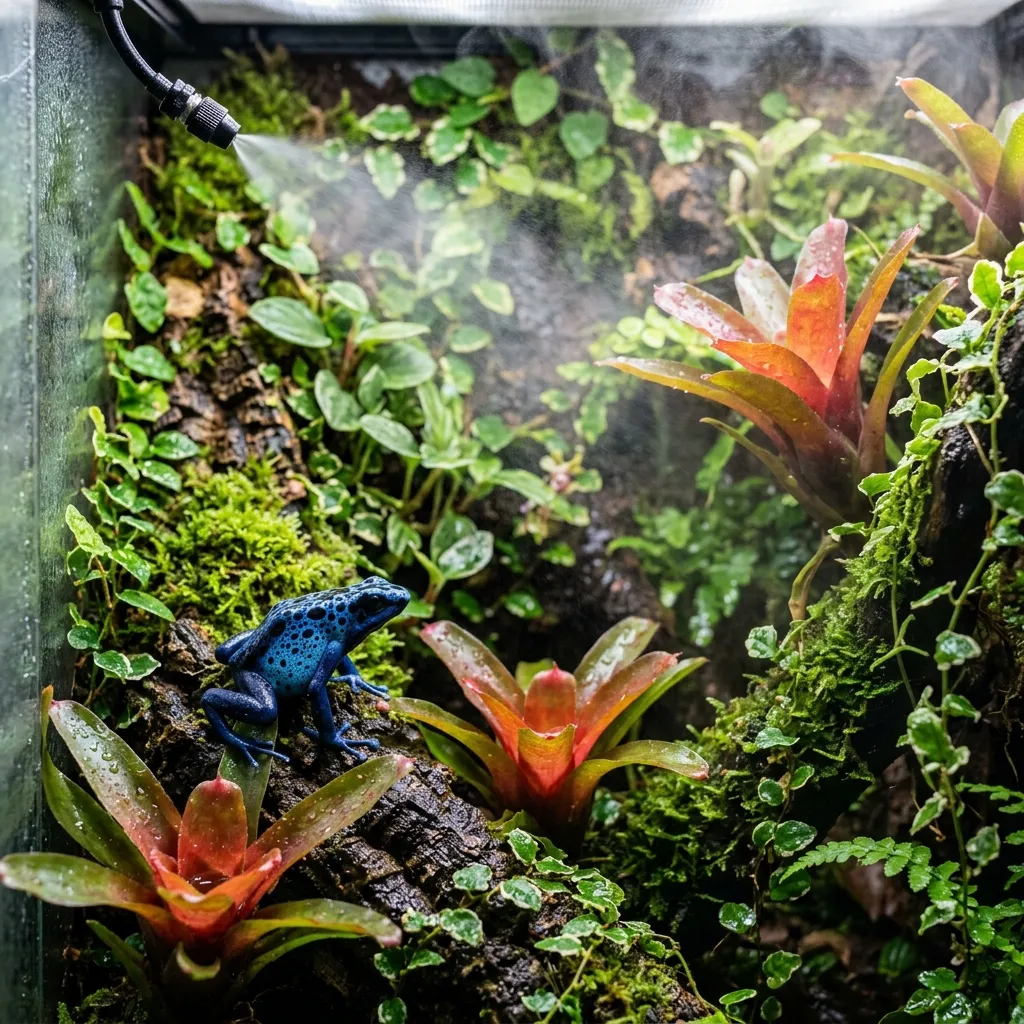
The Dendrobates Ecosystem: Why Bioactive?
For poison dart frogs (Dendrobatidae), a bioactive terrarium is not an aesthetic luxury; it is an absolute biological necessity. These species come from the depths of the rainforest, where ambient humidity almost never drops below 80%. In such a closed, humid environment, without a clean-up crew (CUC) and live plants, the tank would quickly become a septic pit of lethal anaerobic bacteria.
By building a tropical bioactive vivarium, we are not just creating a beautiful landscape, we are designing a waste-processing machine that will work for years.
1. The Vivarium Base: Drainage (False Bottom) and ABG
You must never place the soil directly on the bottom glass. Since you will mist the terrarium daily, the water must have a place to escape so it doesn't rot the roots.
- Drainage Layer (LECA): Use lightweight expanded clay aggregate (LECA) or a plastic egg crate false bottom at least 5 cm deep. This layer will act as a subterranean aquifer.
- Separator Mesh: A fiberglass barrier is mandatory over the LECA to prevent the soil from falling and clogging the drainage.
- Tropical Substrate (ABG Mix): Invented by the Atlanta Botanical Gardens, the ABG mix (tree fern fiber, charcoal, sphagnum, bark, and coco fiber) is the gold standard. It lasts for years without compacting, allowing water to pass through while retaining necessary moisture.
2. Leaf Litter: The True Forest Floor
In the jungle, bare soil does not exist. A thick layer of dry leaves (3 to 5 cm) over the ABG substrate is the most important structure for your dart frog vivarium.
Use durable leaves like Oak, Magnolia, or Indian Almond (Catappa). This layer prevents delicate frogs from getting covered in dirt, provides the primary food for your isopods, and creates a three-dimensional network of microscopic shelters where frogs feel safe to hunt.
3. The Tropical Clean-Up Crew (Microfauna)
The high temperature and humidity of a dart frog vivarium is the absolute paradise for fungi. You need an army to fight them:
- Springtails (Folsomia candida): They are your main infantry. Seeded by the thousands, these microscopic white insects will actively consume mold and fungus spores before they bloom. Additionally, they are an excellent secondary food source for smaller frogs and tadpoles.
- Dwarf White Isopods (Trichorhina tomentosa): Avoid large and voracious isopods (like Dairy Cows) that could stress the frogs or compete for food. Dwarf whites are perfect: they live underground, devour feces and decaying matter, and are soft enough for an adult dart frog to occasionally eat as a nutritious snack.
4. Ideal Plants for Dart Frogs
Flora doesn't just decorate; it filters the air, breaks lines of sight (reducing territorial stress), and offers breeding spots.
- Bromeliads (Neoregelia spp.): Fundamental. Dart frogs of the genera Oophaga and Ranitomeya use the pools of water that form in the center of bromeliads to deposit their tadpoles.
- Vines and Climbers: Ficus pumila (Creeping fig) or Pothos are excellent for quickly covering foam or cork backgrounds.
- Mosses and Ferns: Java moss or revived Sphagnum on the logs will create that cloud forest aesthetic while keeping local humidity very high.
5. Misting System and Ventilation
Maintaining 80-100% humidity by hand-misting twice a day is exhausting. The smartest investment you can make is an automatic misting system.
Set it to spray reverse osmosis (RO) or distilled water for 15-30 seconds in the morning and evening. Never use tap water, as the minerals will permanently stain your glass and slowly kill your bromeliads. Combine this with a glass top that has a small strip of ventilation mesh to ensure gas exchange and prevent the windows from fogging up permanently.
Ready to build your jungle?
Find <a data-internal="true" href="/reviews/abg-mix-substrate" style="text-decoration: underline; color: var(--accent-green); cursor: pointer;">ABG mix</a>, LECA clay balls, misting systems, and microfauna in our store.
View Tropical Products