Bioactive Terrarium 101
The ultimate guide. Learn about the 5 essential layers to build a perfect self-sustaining ecosystem.
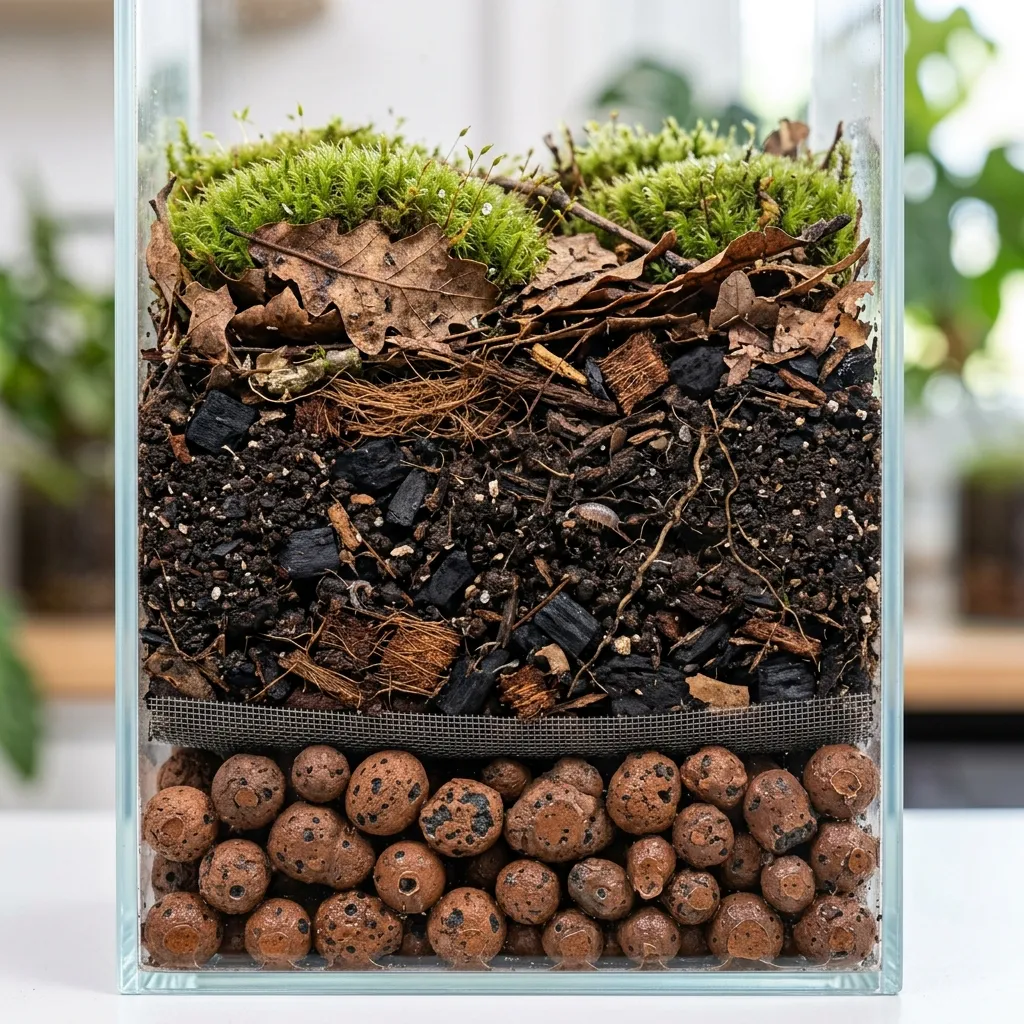
What exactly is a bioactive terrarium?
A bioactive terrarium is not just a cage with dirt; it is a living, self-sustaining, and functional ecosystem contained within four glass walls. Its main goal is to closely mimic nature's biological cycles. In this environment, live plants, microorganisms, and small arthropods (known as microfauna or clean-up crew) work together to process your pet's biological waste.
By breaking down feces, leftover food, and dead leaves, the microfauna converts this waste into vital nutrients that plants absorb through their roots. This endless cycle not only creates a much more enriching and stimulating environment for the animal but also drastically reduces the frequency and difficulty of maintenance for you, eliminating the need to constantly change the substrate.
However, for this magic to happen sustainably, the soil structure cannot simply be potting soil thrown into the bottom of the tank. It requires a specific architecture, designed to balance airflow and water retention. This architecture is strictly divided into 5 fundamental layers.
1. The Drainage Layer (False Bottom)
At the absolute base of the ecosystem lies the drainage layer, also known as the "false bottom". Its critical function is to act as a protective reservoir for excess water that drains through the soil. If you make the mistake of placing the substrate directly on the bottom glass, the water will stagnate down there. This will quickly drown your plants' roots, rot organic matter, and generate lethal anaerobic bacteria that smell like rotten eggs.
- LECA (Lightweight Expanded Clay Aggregate): This is the gold standard. They are lightweight, porous, do not degrade over time, and are excellent for maintaining stable ambient humidity.
- Aquarium Gravel or Stones: They are 100% functional and very cheap, but they will make the terrarium incredibly heavy and impossible to move.
- Plastic Egg Crate (Light diffuser): Ideal for advanced vivariums incorporating aquatic elements like waterfalls or ponds, as they maximize the available water volume.
2. The Substrate Barrier
Immediately above your chosen drainage layer, you must place a physical barrier. A fiberglass mesh (like standard window screen) is generally used. Although usually the cheapest piece of the entire build, structurally it is the most crucial.
Without this barrier, gravity and constant watering will cause the fine organic soil to slowly filter down between the stones or clay of the bottom layer. Over the months, your drainage will collapse, forming a toxic swamp of mud that will block all oxygen and destroy the ecosystem.
3. The Bioactive Substrate (The <a data-internal="true" href="/reviews/abg-mix-substrate" style="text-decoration: underline; color: var(--accent-green); cursor: pointer;">ABG Mix</a>)
This is the literal heart of your terrarium: the medium where plants will grow and insects will live. Not just any soil will do. The undisputed global standard for tropical terrariums is the legendary ABG mix (created by the Atlanta Botanical Gardens).
This mix is meticulously balanced to retain large amounts of moisture without compacting or suffocating roots over the years.
- Tree Fern Fiber: Provides long-term structure and prevents soil compaction.
- Horticultural Charcoal: Acts as a biological sponge and natural filter, absorbing toxins, odors, and soil impurities.
- Sphagnum Moss: Works like a giant sponge, retaining incredible levels of moisture to release it slowly into the air.
- Coco Fiber and Orchid Bark: Provide economical volume and promote air channels for roots to breathe.
4. The Leaf Litter
A thick layer (at least 3 to 5 centimeters) of whole dry leaves on the soil surface is a non-negotiable requirement. Bare soil should never be visible from above.
As the leaves slowly decompose, they become the primary and inexhaustible food source for your clean-up crew. Furthermore, they provide a microscopic maze of safe hiding spots and humid refuges where insects can reproduce without being 100% predated by your reptile or amphibian.
5. The Clean-Up Crew (C.U.C. / Microfauna)
These are the janitors and workers of your bioactive terrarium. Without them, droppings and fungi would simply accumulate, causing toxic ammonia spikes. You must add an initial colony of these arthropods to the tank and let them settle for a few weeks before introducing your pet.
- Springtails: Tiny (almost microscopic) white insects that dedicatedly feed on mold and fungus spores, preventing undesirable outbreaks in such a humid environment.
- Isopods (Woodlice): Terrestrial crustaceans (similar to little armadillos) that handle the heavy lifting. They will devour your pet's feces, dead feeder insects, and decaying leaves.
Ready to start your project?
Check our recommended gear section to find the perfect <a data-internal="true" href="/reviews/abg-mix-substrate" style="text-decoration: underline; color: var(--accent-green); cursor: pointer;">ABG mix</a>, LECA drainage, and isopods.
View Recommended Products