Bioactive Paludariums: When Earth Meets Water
Learn to design a split ecosystem where terrestrial and aquatic life coexist in perfect harmony.
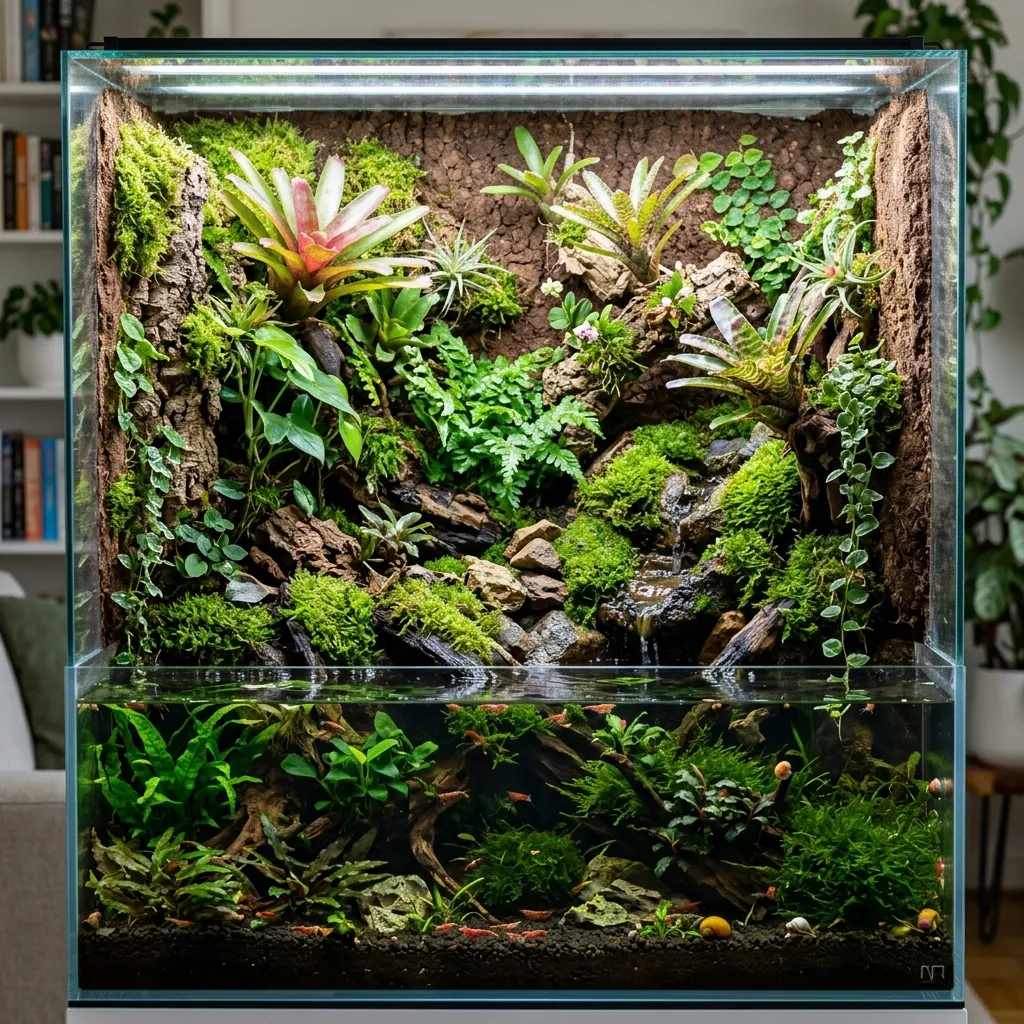
The Magic of the Paludarium (Terrarium + Aquarium)
A paludarium is the ultimate expression of bioactive landscaping. It combines a functional terrestrial environment with an aquatic (or swampy) zone. They are the perfect habitat for fascinating animals like Vampire Crabs (Geosesarma), semi-aquatic frogs, or fire-bellied newts.
However, combining land and water under the same glass roof presents a lethal danger: capillarity. If the soil touches the water, it will absorb moisture like a giant sponge, turning your substrate into putrid mud drowning in anaerobic bacteria.
1. Creating the Divide (The Aquatic False Bottom)
The modern technique for building a safe paludarium involves suspending the terrestrial part above the water level or creating an impermeable retaining wall:
- Floating or Suspended Islands: Use plastic egg crates supported by PVC pipes. Over the crate, place a fiberglass mesh, and on top of that, the terrestrial substrate. Water flows freely underneath.
- Expanding Foam Walls: Build a dam using dragon stone glued with polyurethane expanding foam and black aquarium silicone. Be sure to seal every pore so water does not leak into the land zone.
2. Filtration: The Heart of the River
A stagnant aquatic zone is a death sentence. The water must be oxygenated and biologically purified.
- Sponge or HOB Filters: A small internal canister filter moves the water and introduces oxygen.
- External Canisters (Advanced): For large paludariums with a high biological load (e.g., with fish and turtles).
- Bioactive Waterfalls: Use the filter's output tube to create a stream cascading down the cork or back wall. Beneficial bacteria colonizing the wet rocks will filter ammonia beautifully.
3. The Two Clean-Up Crews (Double CUC)
In a paludarium, you need two armies working in sync: one for land and one for water.
- Terrestrial CUC: Tropical springtails and small isopods (like Dwarf Whites). Avoid large, clumsy isopods that might fall into the water and drown.
- Aquatic CUC: You need Neocaridina shrimp (if fish/crabs won't eat them) or snails (Ramshorn or Nerite). They will consume algae and leftover food on the aquatic floor.
4. Transition and Amphibious Plants
The most beautiful point of a paludarium is the riparian zone (where water touches land). This zone must be planted with species that love having "wet feet":
- Java Moss: The king of transition. It will grow submerged, climb up the waterfall, and spread across the moist land.
- Anubias and Java Ferns (Microsorum): Aquatic plants that grow wonderfully attached to rocks or wood, right at the waterline.
- Pothos: Plant the roots directly in the water (hidden in the filter) and let the leaves trail into the terrestrial zone. It is the greatest consumer of aquatic nitrates in the botanical world.
5. The Danger of Drowning
If you keep terrestrial animals (like geckos, non-swimming frogs, or insects), you must always provide multiple exit ramps. Use Mopani wood that extends from the bottom of the water to dry land to ensure any animal that accidentally falls in can climb back to safety.
Ready to build the riverbanks?
Find water pumps, biological filters, and amphibious plants for your project.
View Paludarium Gear