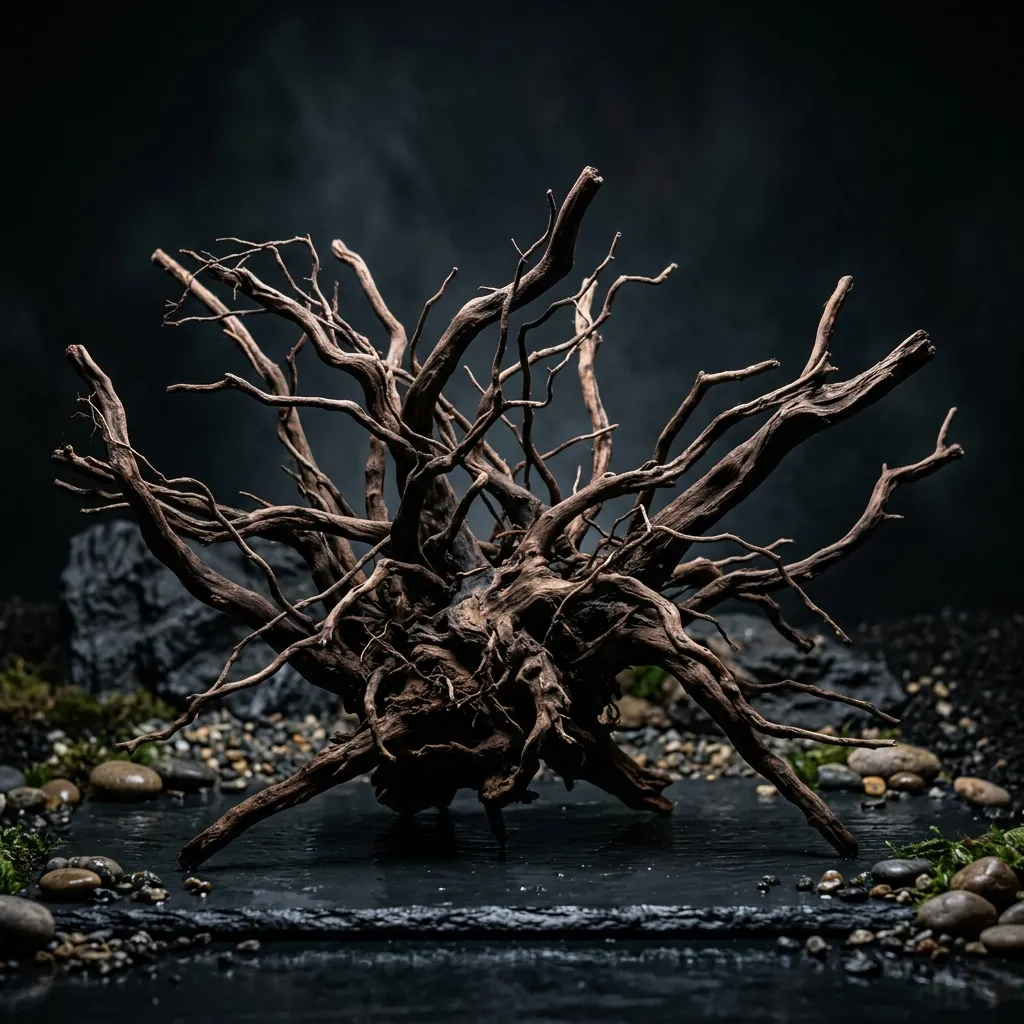
Galapagos Spider Wood: The Ultimate Arboreal Hardscape
✅ Pros
- + Incredibly complex branching structure creates vast vertical climbing networks without taking up floor space.
- + Very lightweight, making it safe to lean against glass walls or glue into expanding foam backgrounds.
- + The thin, textured branches are the absolute perfect diameter for the grips of Crested Geckos and small tree frogs.
- + Releases beneficial tannins into the soil (or water features), naturally inhibiting bacterial growth.
- + Visually stunning; it instantly turns an empty glass box into a professional-looking slice of the jungle.
❌ Cons
- - Will grow a thick layer of harmless white mold during the first few weeks in a humid terrarium.
- - Extremely buoyant; if used in a paludarium water feature, it must be soaked for weeks or weighed down with rocks.
- - Thinner branches can snap easily if handled roughly during the initial hardscape construction.
Creating Vertical Depth in Arboreal Enclosures
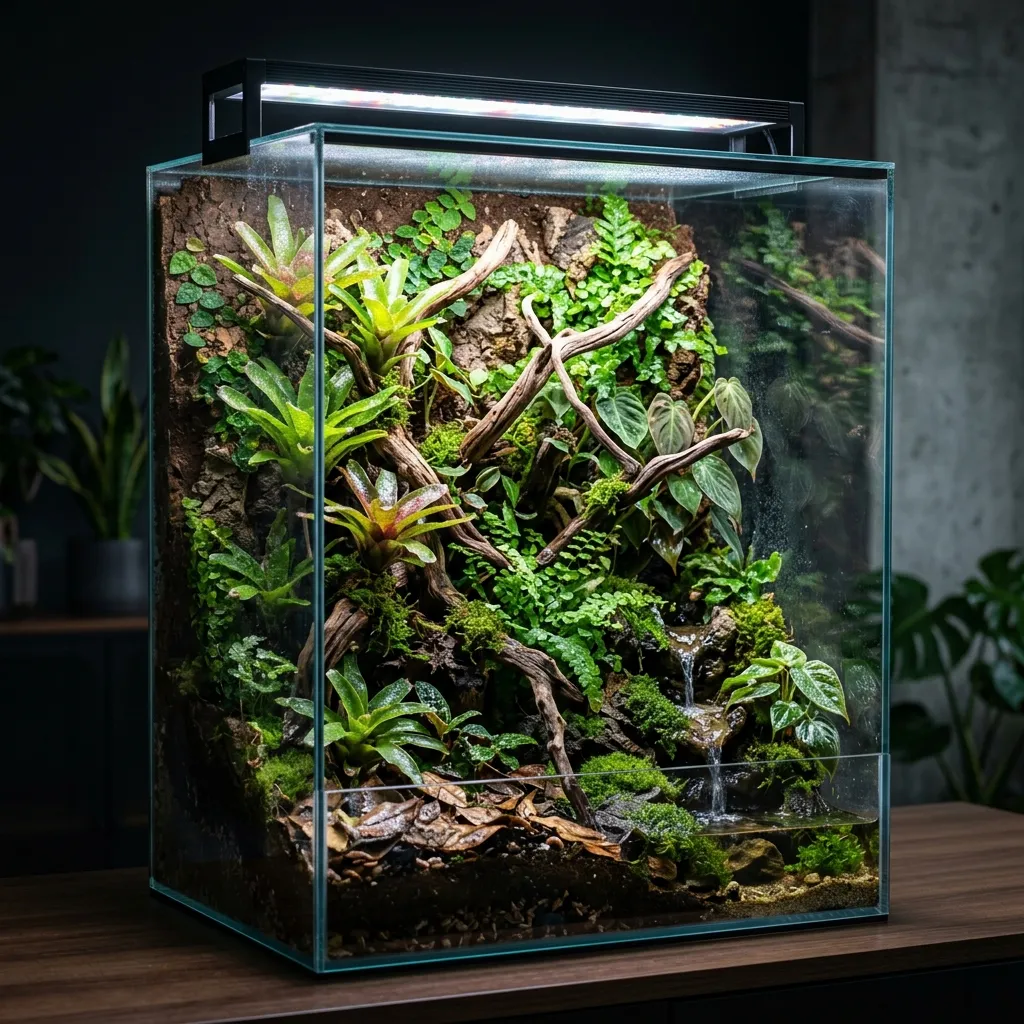
Arboreal reptiles and amphibians, like Crested Geckos, Gargoyle Geckos, and Tree Frogs, spend 90% of their lives off the ground. If you put them in a tall tank but only provide a few vertical bamboo sticks, you are wasting the enclosure's potential and depriving the animal of enrichment. Galapagos Spider Wood solves this by creating a three-dimensional web of climbing vines. These complex branches encourage natural jumping, hunting, and exploring behaviors. Furthermore, the jagged structure of the wood provides the perfect anchor points for live terrarium moss and trailing vines like Pothos or Philodendron to naturally climb and weave through, creating a dense, jungle canopy effect that looks breathtaking and makes your pets feel secure.
Why We Rely on Spider Wood for Hardscaping
At BioactiveHub, Spider Wood is our undisputed favorite for vertical hardscaping. While we love Cork Bark for backgrounds and hiding spots, Cork is often too thick and cumbersome to create delicate crossing branches. We use Galapagos Spider Wood specifically because they ethically source and sandblast their wood to remove sharp edges and loose bark. We often take two or three large pieces of Spider Wood, lock their branches together like puzzle pieces, and use Cyanoacrylate (super glue) and cotton balls to weld them into one massive, freestanding centerpiece tree. It provides maximum surface area for the animals while leaving the bioactive substrate below fully accessible for the cleanup crew and terrestrial plants.
Technical Specifications & Features
- ⚙️ Material: 100% Natural Azalea/Rhododendron root wood.
- ⚙️ Texture: Sandblasted smooth to prevent reptile scale damage.
- ⚙️ Weight: Extremely lightweight (ideal for background mounting).
- ⚙️ Water Chemistry: Lowers pH and releases tannins (beneficial for amphibians).
- ⚙️ Sizing: Available in various sizes from 10 inches up to 24+ inches.
Installation Guide: The White Mold Phase
There is a critical phase you MUST expect when using Spider Wood in a humid, bioactive terrarium. Within the first two weeks of setup, the wood will suddenly erupt in a thick, fuzzy layer of white mold or bio-film. DO NOT PANIC. This is a completely natural, harmless process where residual sugars in the wood are being broken down. Do not throw the wood away and do not use bleach! Simply introduce a robust cleanup crew of Springtails and Isopods. They view this white mold as a five-star buffet and will completely consume and clean the wood within a week or two, leaving behind a perfectly cured, beautiful centerpiece.
Long-Term Care and Plant Mounting
Spider Wood requires zero long-term maintenance once it has cured and the initial mold phase passes. Over several years in a highly humid environment, the wood will very slowly soften and decompose, feeding your bioactive soil. To maximize its aesthetic value, we highly recommend mounting live plants directly to the branches. You can take a Bromeliad pup or a clump of Java Moss, wrap it around a crotch in the Spider Wood branches, and secure it using dark cotton thread or a dab of cyanoacrylate gel. The wood retains just enough moisture from daily misting to allow epiphytic roots to latch on and thrive.
Alternative Hardscape Woods
If you are setting up a dry, arid environment for a Bearded Dragon or Leopard Gecko, Spider Wood can look a bit out of place; Ghost Wood or Cholla Wood are better aesthetic choices for deserts. If you are building a heavy-duty setup for a large, destructive reptile (like a Monitor Lizard or a large Python), Spider Wood's delicate branches will likely snap under their weight. In those cases, dense, heavy woods like Malaysian Driftwood, Mopani Wood, or thick Grapewood branches are much safer and more structural choices.
All Products