Exo Terra Glass Terrarium: The Bioactive Foundation
✅ Pros
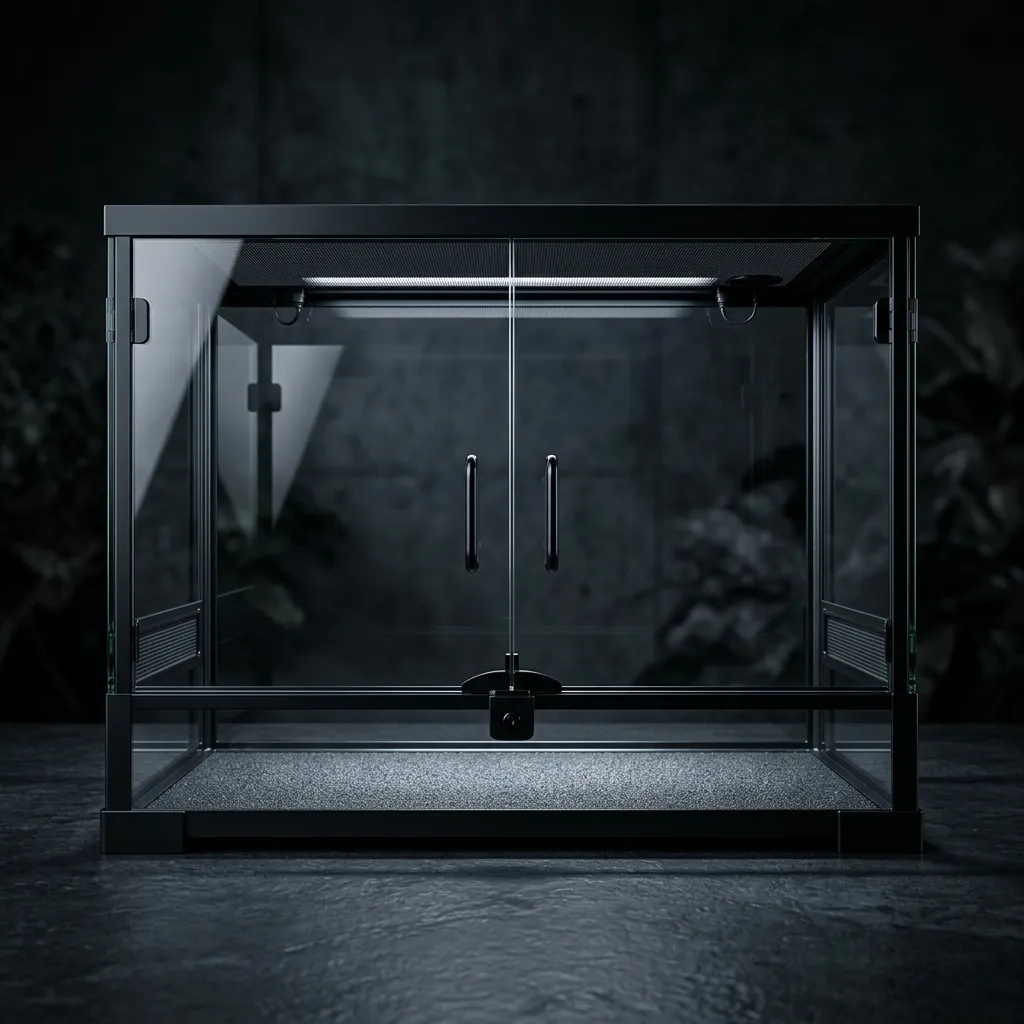
- + Dual front-opening doors allow for incredibly easy maintenance, feeding, and misting without stressing the animal.
- + The raised bottom frame allows room for a substrate heater and provides a deep, waterproof base for bioactive drainage layers.
- + Unique front window ventilation strip prevents condensation build-up and promotes healthy airflow.
- + The full stainless steel mesh top allows maximum UVB and infrared heat penetration.
- + Closable inlets for wires and tubing make installing waterfalls, foggers, and thermostat probes a breeze.
❌ Cons
- - Significantly heavier and more expensive than standard glass aquariums or PVC enclosures.
- - The included foam rock background is notoriously flimsy; crickets can chew it, and frogs can get stuck behind it.
- - The top mesh screen can rust over time if subjected to constant, direct misting in a highly humid setup.
Stop Using Fish Aquariums for Reptiles
An aquarium is designed to hold water, not air. If you put a reptile in a fish tank, the lack of cross-ventilation creates a stagnant, humid swamp that acts as a breeding ground for respiratory infections (RI). Furthermore, reaching down into a tank from the top triggers a reptile's instinctual fear of predatory birds, causing immense stress. A front-opening reptile enclosure like the Exo Terra Glass Terrarium solves both of these critical issues. The patented front vent draws cool air in from the bottom, while the hot air escapes through the top mesh, creating a natural chimney effect. This constant flow of fresh air is absolutely vital for the health of your bioactive clean-up crew (isopods and springtails) and prevents dangerous mold outbreaks.
Why Exo Terra is Our Baseline Standard
At BioactiveHub, whenever we design a new display tank or write a species care guide, we default to Exo Terra dimensions (like the classic 18x18x24 for arboreal species). We choose this tank because of its incredibly deep, waterproof bottom. When building a bioactive terrarium, you need at least 2 inches of Leca or clay balls for a drainage layer, topped with a mesh barrier, and then 3 to 4 inches of ABG mix substrate. Standard front-opening tanks from budget brands often have a low glass lip, meaning your substrate will spill out every time you open the door. The Exo Terra's high glass dam easily accommodates massive, deep bioactive soil profiles, and even allows for small paludarium water features.
Technical Specifications & Features
- ⚙️ Material: High-quality glass with a durable plastic frame.
- ⚙️ Doors: Dual front-opening doors with a secure, escape-proof lock.
- ⚙️ Ventilation: Patented front window vent and full stainless steel mesh cover.
- ⚙️ Base: Raised, waterproof bottom designed specifically for deep substrates and drainage.
- ⚙️ Cable Management: Sealable wire and tube inlets on the back of the top lid.
Installation Guide: Preparing for Bioactive
Before adding any substrate, we highly recommend removing the included 3D foam background. While it looks nice initially, feeder insects will burrow into it, and the space behind it is a notorious trap for small frogs and geckos. Instead, use the bare back glass to create your own custom expanding foam and coco-fiber background. When setting up your drainage layer, ensure the water level in your hydroballs never reaches the level of the front ventilation strip to avoid leaking. If you are using a misting system like a MistKing, the top mesh lid can be easily drilled or cut to securely mount the misting nozzles.
Long-Term Cleaning and Maintenance
The beauty of a front-opening bioactive terrarium is that the ecosystem does most of the cleaning for you. However, you will need to maintain the glass to ensure a clear viewing experience. Hard water from misting systems will quickly leave stubborn white calcium stains on the front doors. To clean this safely without using toxic chemicals, mix a 50/50 solution of distilled water and white vinegar. Spray it on a paper towel and wipe the glass, being careful not to let the vinegar drip into the bioactive soil, as it can harm the microfauna. For the best long-term results, always fill your misting system reservoir with Reverse Osmosis (RO) or distilled water.
Alternative Enclosure Options
While Exo Terra is the industry standard for glass tanks, Zoo Med offers a very similar front-opening enclosure (the ReptiBreeze or Naturalistic Terrarium) with a single door instead of dual doors, which some keepers prefer for an unobstructed view. If you are keeping a very large species, such as a mature Ball Python, Boa Constrictor, or Monitor Lizard, glass terrariums become dangerously heavy and lose heat too quickly. In those scenarios, upgrading to a custom PVC enclosure (from brands like Toad Ranch or Animal Plastics) is a far superior, albeit much more expensive, long-term investment.
All Products