Springtail & Isopod Cultures: The Ultimate Bioactive Clean Up Crew
✅ Pros
- + Completely eliminates the need for spot-cleaning animal waste in properly balanced setups.
- + Actively prevents outbreaks of harmful mold, mildew, and anaerobic bacteria.
- + Serves as an excellent supplemental food source for micro-predators like poison dart frogs and mourning geckos.
- + Once established, they breed prolifically and sustain themselves indefinitely on leaf litter.
- + Fascinating to observe; they add an extra layer of biodiversity to your miniature ecosystem.
❌ Cons
- - Cultures can crash during shipping if exposed to extreme heat or freezing temperatures.
- - Requires a constant supply of leaf litter and calcium to thrive long-term.
- - Some larger isopod species (like Porcellio laevis) can occasionally nibble on soft, live plant roots if underfed.
What is a Clean Up Crew (CUC) and Why Do You Need It?
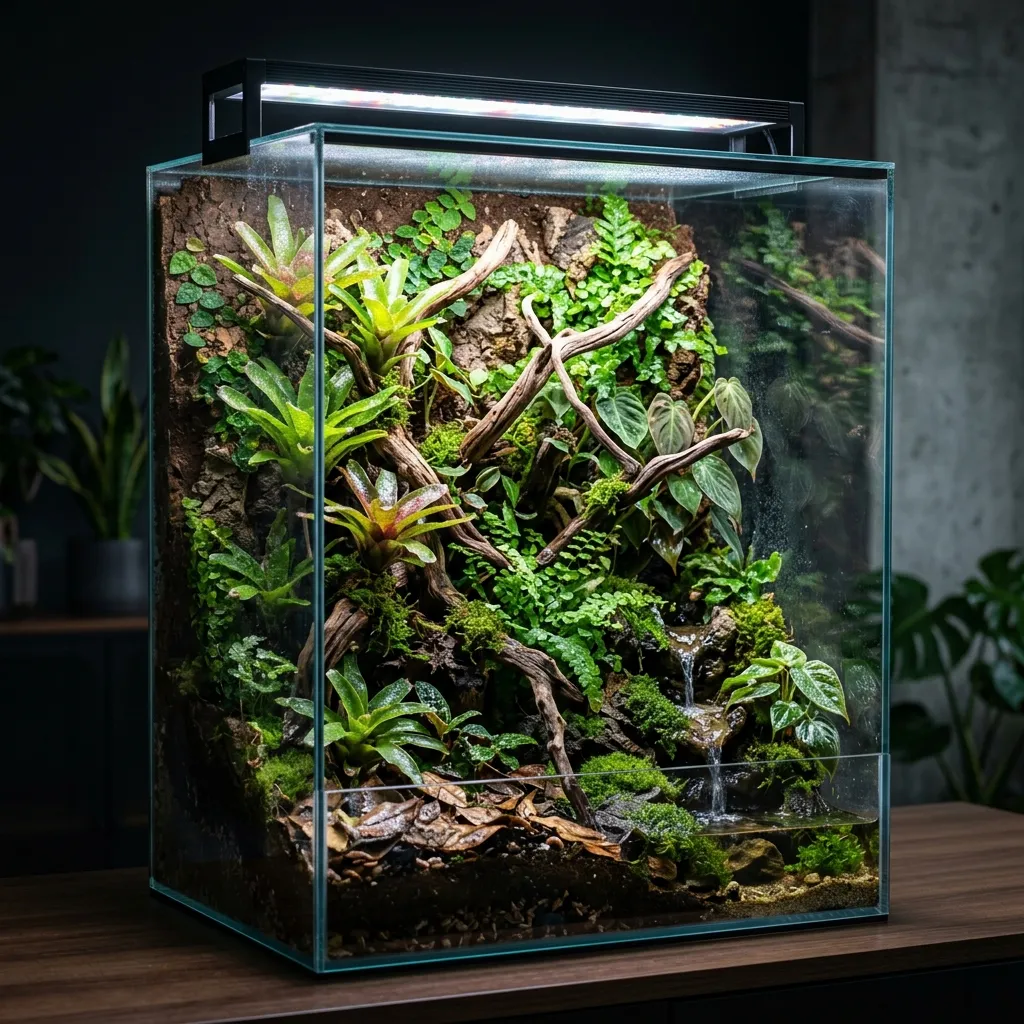
The secret to a zero-maintenance bioactive terrarium lies entirely in the Clean Up Crew. In nature, when a leaf falls or an animal leaves waste, it doesn't just sit there—it is rapidly broken down by a complex web of detritivores. In the enclosed environment of a glass terrarium, this natural process must be artificially introduced. Springtails (tiny, jumping hexapods) specialize in eating mold, fungus, and soft rotting vegetation. Isopods (terrestrial crustaceans, often called pillbugs or woodlice) tackle the heavier lifting, consuming animal feces, decaying wood, and shed reptile skin. Together, they convert this waste into nutrient-rich frass (droppings) that acts as a potent, organic fertilizer for your live terrarium plants. Without a CUC, a humid vivarium becomes a toxic, foul-smelling swamp; with them, it becomes a self-sustaining, self-cleaning slice of the rainforest.
Why We Rely on Dwarf Whites and Tropical Springtails
While the hobby has seen an explosion of 'designer' isopods bred for striking colors and patterns, we constantly return to the classics for our functional bioactive builds: Dwarf White Isopods (Trichorhina tomentosa) and Tropical Pink/White Springtails (Collembola sp.). Why? Because they are incredibly resilient, prolific breeders, and they stay hidden. Dwarf Whites spend almost their entire lives burrowed within the ABG mix and leaf litter, meaning they rarely become a snack for larger reptiles like crested geckos or bearded dragons, allowing the population to remain stable. They are parthenogenetic (females clone themselves), so a culture can explode from just a few individuals. We inoculate every single custom vivarium we build with these two species, ensuring the nitrogen cycle is fully functional before we even think about introducing a reptile or amphibian.
Culture Specifications & Details
- ⚙️ Species (Isopods): Dwarf White (Trichorhina tomentosa) - Ideal for tropical setups.
- ⚙️ Species (Springtails): Tropical White/Pink (Collembola sp.) - Mold-eating specialists.
- ⚙️ Dietary Needs: Decaying organic matter, leaf litter, rotting wood, and supplemental calcium.
- ⚙️ Ideal Environment: 70-85°F (21-29°C) with high humidity (70%+).
- ⚙️ Reproduction: Highly prolific; populations self-regulate based on available food.
How to Introduce Your Clean Up Crew
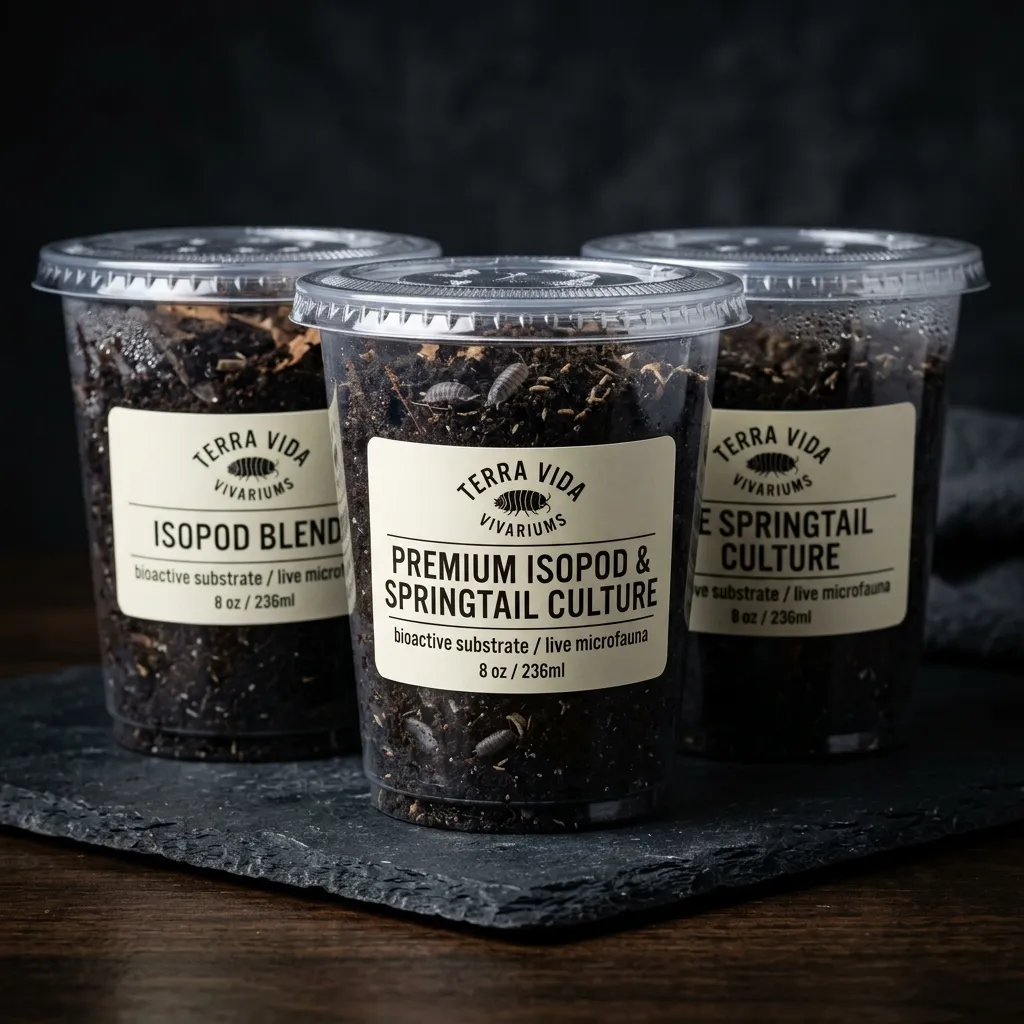
Introducing your CUC to a new terrarium (a process called 'seeding' or 'inoculating') should be done at least two to four weeks before adding your primary pet. This allows the microfauna to establish a breeding population and hide securely. For springtails cultured on charcoal, simply add a small amount of distilled water to the culture cup to float the springtails, then gently pour the water directly into the leaf litter of your terrarium. For isopods cultured in soil, gently scoop the soil and the isopods out and bury them slightly under a thick layer of leaf litter (like oak or magnolia leaves) and cork bark flats. It is crucial to immediately provide them with food; a handful of crushed leaf litter and a small pinch of specialized isopod diet or brewer's yeast will kickstart their population explosion.
Long-Term Care and Feeding
Once established in a balanced bioactive terrarium, the CUC requires very little direct maintenance. However, you must ensure they never run out of their primary food source: leaf litter. As the isopods and springtails consume the leaves, the leaf litter layer will visually thin out and break down into soil. You must continuously replenish the leaf litter every few months. Additionally, isopods are crustaceans and require calcium to properly molt their exoskeletons. Providing a piece of cuttlebone, crushed eggshells, or limestone rock hidden under a piece of cork bark ensures they have the minerals they need. Always maintain damp (not soaking wet) substrate, as these creatures breathe through modified gills and will quickly desiccate and die if the terrarium dries out completely.
Alternative Microfauna Options
If you are keeping arid species like leopard geckos or bearded dragons, Dwarf White isopods and tropical springtails will not survive the low humidity. For desert bioactive setups, you should instead look into Giant Canyon Isopods (Porcellio dilatatus) or Powder Orange/Blue Isopods (Porcellionides pruinosus), combined with arid springtails, as they tolerate drier conditions significantly better. If you want your CUC to also serve as a visually appealing display element, species like Zebra Isopods (Armadillidium maculatum) or Dairy Cows (Porcellio laevis) are fantastic, active surface-dwellers, though they may require more supplemental feeding to prevent them from eating your live plants.
All Products