Bioactive Supply Lotus Pods: Essential Microfauna Real Estate
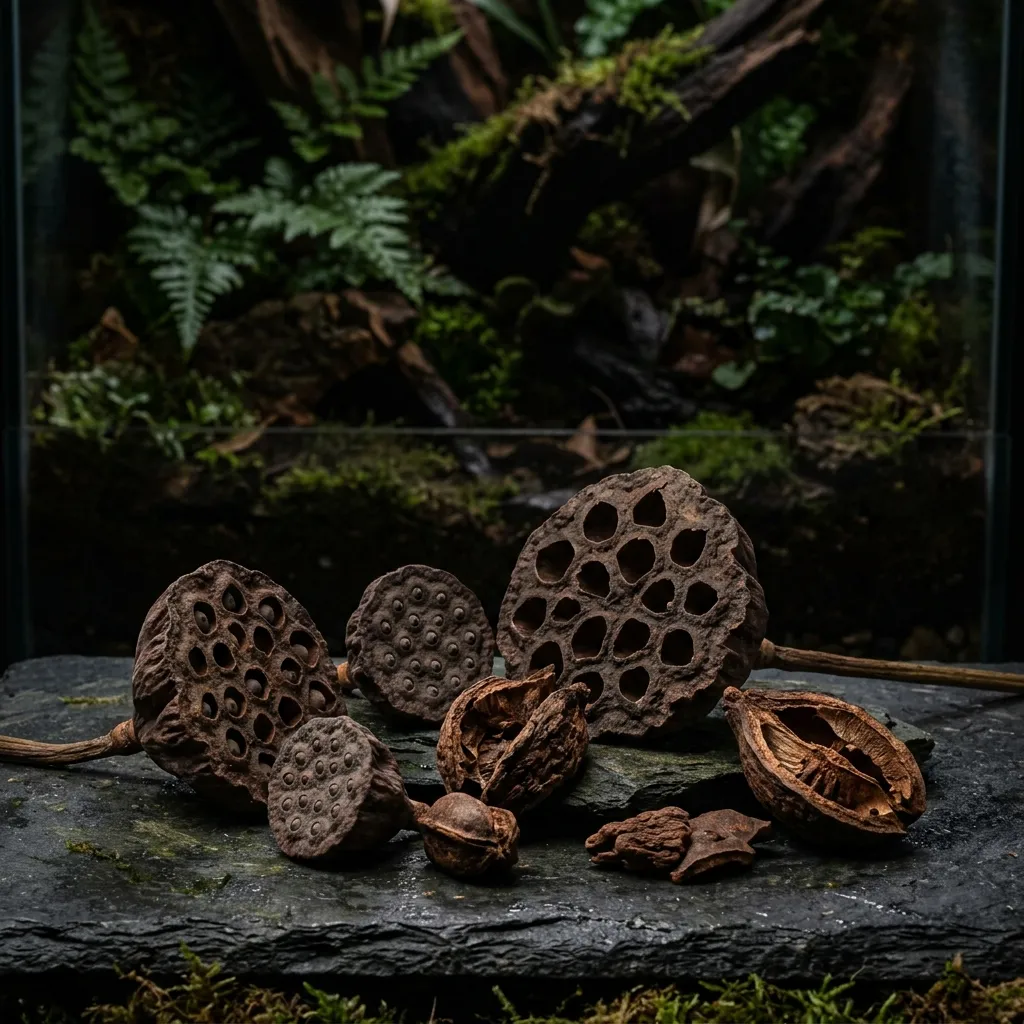
✅ Pros
- + Deep holes provide impenetrable fortresses for isopods and springtails to breed without being eaten by your reptiles.
- + Releases beneficial tannins that naturally inhibit harmful bacteria and mold growth in the substrate.
- + Visually striking aesthetic; they add an incredibly naturalistic, 'jungle floor' texture to any vivarium.
- + Very long-lasting hardwood botanical; they take over 6 to 8 months to fully break down in a humid tank.
- + Can be used in paludarium water sections as natural tadpole rearing cups for Poison Dart Frogs.
❌ Cons
- - May trigger trypophobia (fear of clustered holes) in some individuals.
- - If not boiled properly before use, they will float indefinitely in aquatic setups.
- - Can sometimes trap small feeder insects (like crickets) inside the holes.
Elevating the Jungle Floor Ecosystem
A true bioactive vivarium is meant to replicate a slice of nature, specifically the complex detritus layer of the jungle floor. Throwing a handful of dead leaves on top of the soil is a good start, but it lacks structural depth. Terrarium botanicals like Lotus Pods, Monkey Bowls, and Magnolia pods introduce three-dimensional architecture to the substrate level. These pods create a moisture-retaining boundary layer directly above the soil. When you mist the tank, the Lotus Pods capture small pools of water, creating drinking stations for small geckos and frogs. Meanwhile, the dark, damp underside becomes a sanctuary where fungal mycelium can grow, providing a constant, natural food source for your essential clean-up crew.
Why We Choose Bioactive Supply
At BioactiveHub, we are incredibly strict about the botanicals we introduce into our display enclosures. Collecting random seed pods from your backyard is a massive risk, as they are often contaminated with deadly pesticides, herbicides, or parasites. We exclusively use Bioactive Supply because their Lotus Pods are 100% organically sourced, pesticide-free, and sterilized before packaging. They consistently deliver large, fully intact pods (usually 3 to 4 inches in diameter) that aren't crushed or rotting. We routinely place two or three of these pods in the back corners of our Poison Dart Frog tanks, and within weeks, lifting one up reveals a swarming metropolis of healthy, breeding Dairy Cow isopods.
Technical Specifications & Features
- ⚙️ Origin: 100% Natural, dried Lotus flower seed pods.
- ⚙️ Size: Typically ranges from 3 to 5 inches in diameter.
- ⚙️ Treatment: Organically sourced, pesticide-free, and pre-sterilized.
- ⚙️ Lifespan: 6-8 months in tropical setups, 1-2 years in arid setups.
- ⚙️ Function: Isopod breeding hide, tannin source, and naturalistic decor.
Installation Guide: The Boiling Protocol
Never throw dry botanicals directly into a terrarium. To prepare Lotus Pods for a bioactive setup, you MUST boil them for at least 15 to 20 minutes. Boiling serves three critical purposes: 1) It completely sterilizes the pod of any hitchhiking fungal spores. 2) It waterlogs the dense wood, ensuring it sinks immediately if you are using it in a paludarium or aquarium. 3) It softens the outer layer, allowing your isopods and springtails to start eating it immediately. After boiling, let the pods cool completely to room temperature before placing them half-buried in your leaf litter layer.
Maintenance and Decomposition
Lotus Pods require absolutely zero maintenance. In fact, their entire purpose is to slowly decay and feed the ecosystem. During the first week, you may notice a slight white biofilm growing on the pod; this is normal and your springtails will devour it. Over the course of 6 to 8 months in a humid, tropical terrarium, the pod will become soft, spongy, and eventually disintegrate completely into rich, organic compost. When you notice a pod has mostly disappeared, simply boil a new one and place it in the exact same spot to keep your microfauna colony booming.
Alternative Terrarium Botanicals
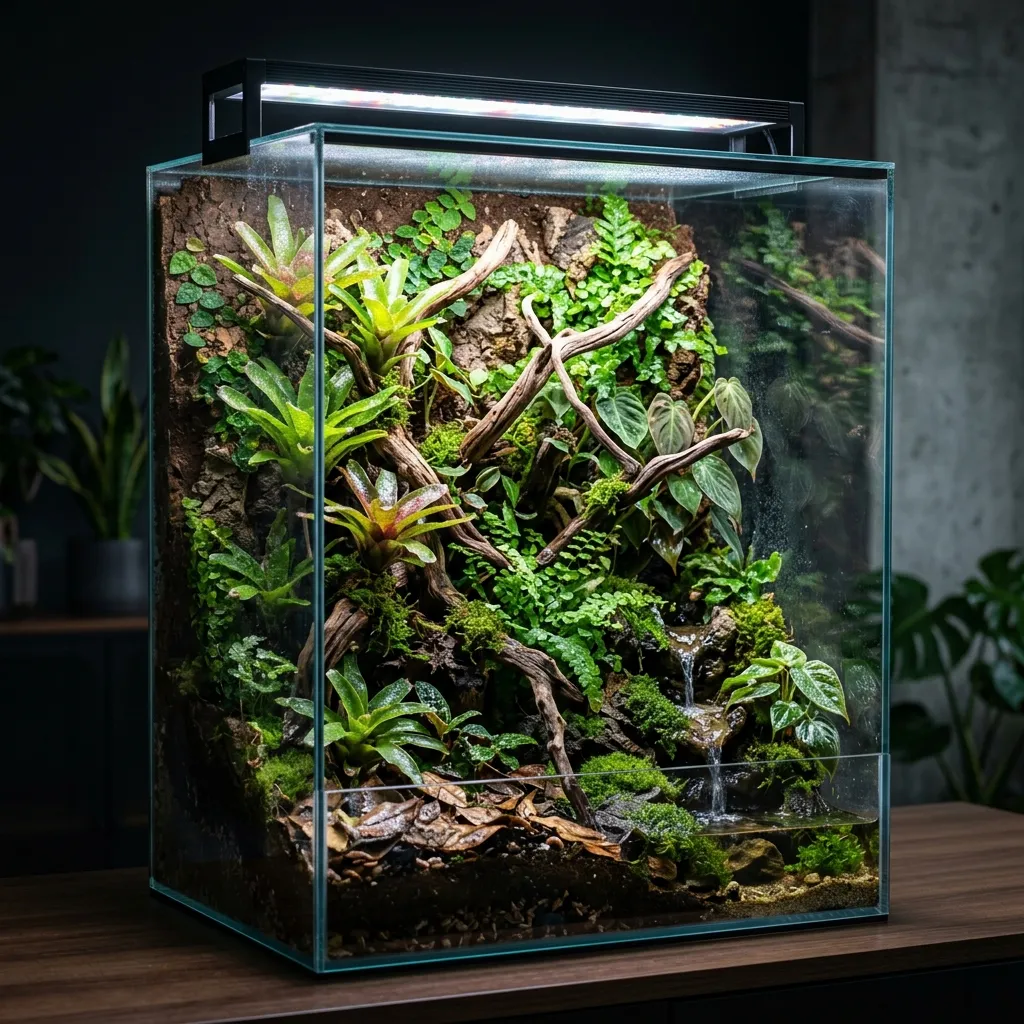
If you don't like the look of Lotus Pods, there are several excellent alternatives for microfauna hides. Magnolia Pods are excellent and provide a similar woody texture. Monkey Pods (Monkey Bowls) are much harder and take years to break down, making them great as permanent water dishes or feeding stations. For arid setups (like Leopard Geckos or Bearded Dragons), Lotus Pods are less useful since isopods require humidity; in those tanks, pieces of cork bark or Cholla wood serve as much better, dry hides.
All Products