Bioactive Supply Leaf Litter: The Unsung Hero of the Vivarium
✅ Pros
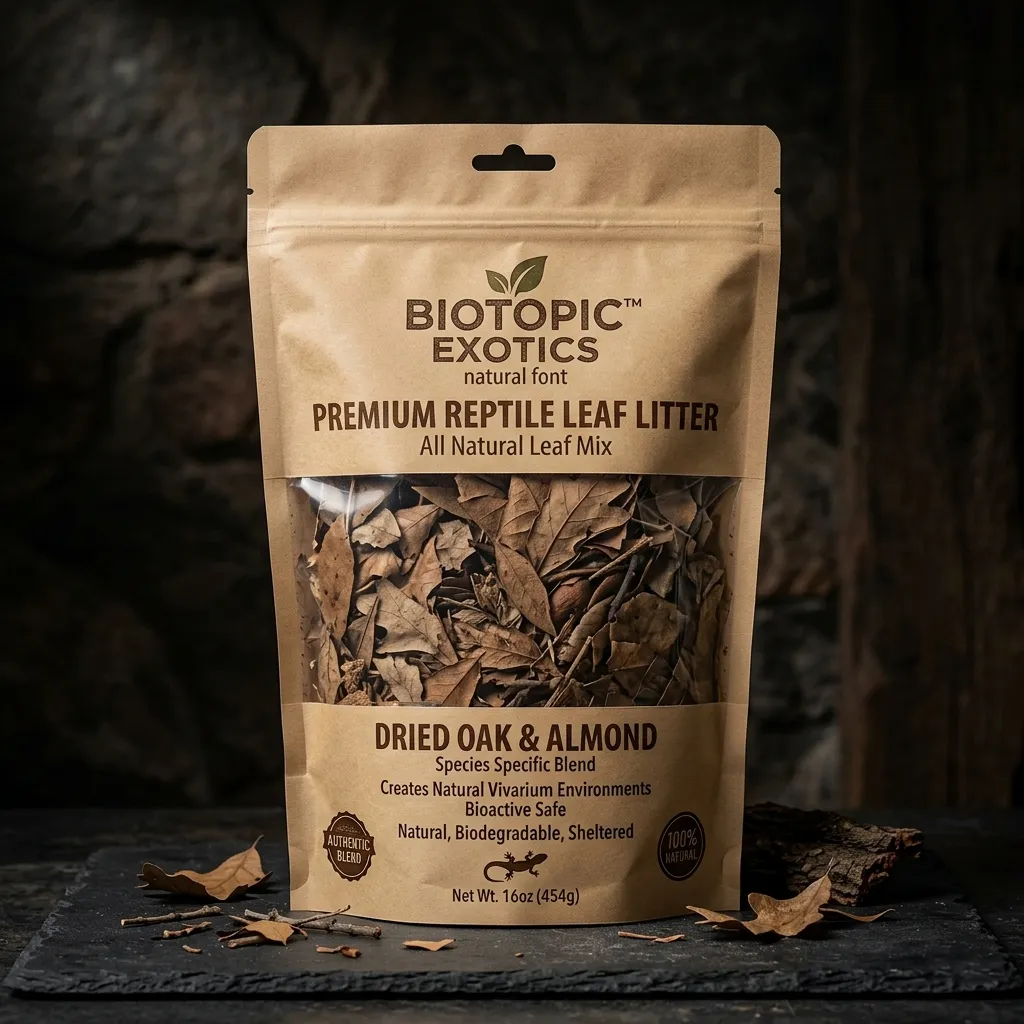
- + Expertly heat-treated and sterilized, eliminating the risk of introducing wild mites, ants, or pathogens.
- + A perfect blend of thick Magnolia leaves (for long-lasting structure) and thinner Oak leaves (for quick microfauna nutrition).
- + Provides essential visual barriers and natural hiding spots, dramatically reducing stress in small amphibians and reptiles.
- + Indian Almond leaves release beneficial tannins that have natural antibacterial properties when exposed to moisture.
- + Creates a hyper-realistic, stunning forest floor aesthetic.
❌ Cons
- - More expensive than collecting leaves from your own backyard (though vastly safer).
- - The thinner leaves will break down entirely in a few months, requiring continuous replenishment.
- - Some very large leaves may need to be crushed or broken by hand to fit proportionately in nano terrariums.
Why Leaf Litter is Mandatory in Bioactive Setups
Many beginners mistakenly believe that the ABG mix alone is enough to sustain a bioactive terrarium. However, in nature, the forest floor is entirely covered by fallen leaves. This leaf litter layer serves multiple critical biological functions. First, it acts as a moisture barrier, preventing the underlying soil from drying out too quickly while keeping the surface dry enough for reptiles to walk on without getting foot rot. Second, it is the primary food source for your Clean Up Crew (CUC). As the leaves slowly decay, fungi and bacteria break them down, which in turn feeds the springtails and isopods. Finally, leaf litter provides a complex, three-dimensional microhabitat. Tiny dart frogs and geckos feel incredibly secure navigating through the labyrinth of curled leaves, which mimics their natural hunting grounds.
Why We Choose the Bioactive Supply Blend
At BioactiveHub, we have seen countless terrariums fail because keepers tried to save a few dollars by raking up random leaves from their local park. Wild leaves are often contaminated with chemical pesticides, automotive exhaust residue, or predatory centipedes that can decimate your isopod population. We exclusively use Bioactive Supply's mix because of its rigorous sterilization process and optimal species blend. Magnolia leaves are thick and leathery, taking up to a year to fully break down, providing long-lasting hiding spots. The Live Oak leaves break down much faster, offering an immediate food source for a booming isopod colony. Meanwhile, the Indian Almond (Catappa) leaves are famous in the hobby for releasing tannins that naturally inhibit fungal overgrowth. It is the perfect trifecta of form and function.
Technical Specifications & Contents
- ⚙️ Species Blend: Magnolia, Live Oak, and Indian Almond (Catappa) leaves.
- ⚙️ Treatment: Heat-treated and baked at 200°F to ensure complete sterilization.
- ⚙️ Volume: Ships in a 1-gallon densely packed resealable bag.
- ⚙️ Chemical Free: 100% organic, sustainably harvested, and free from pesticides or fertilizers.
- ⚙️ Suitability: Safe for all reptiles, amphibians, invertebrates, and even aquarium use.
Installation Guide: How to Layer Your Leaves
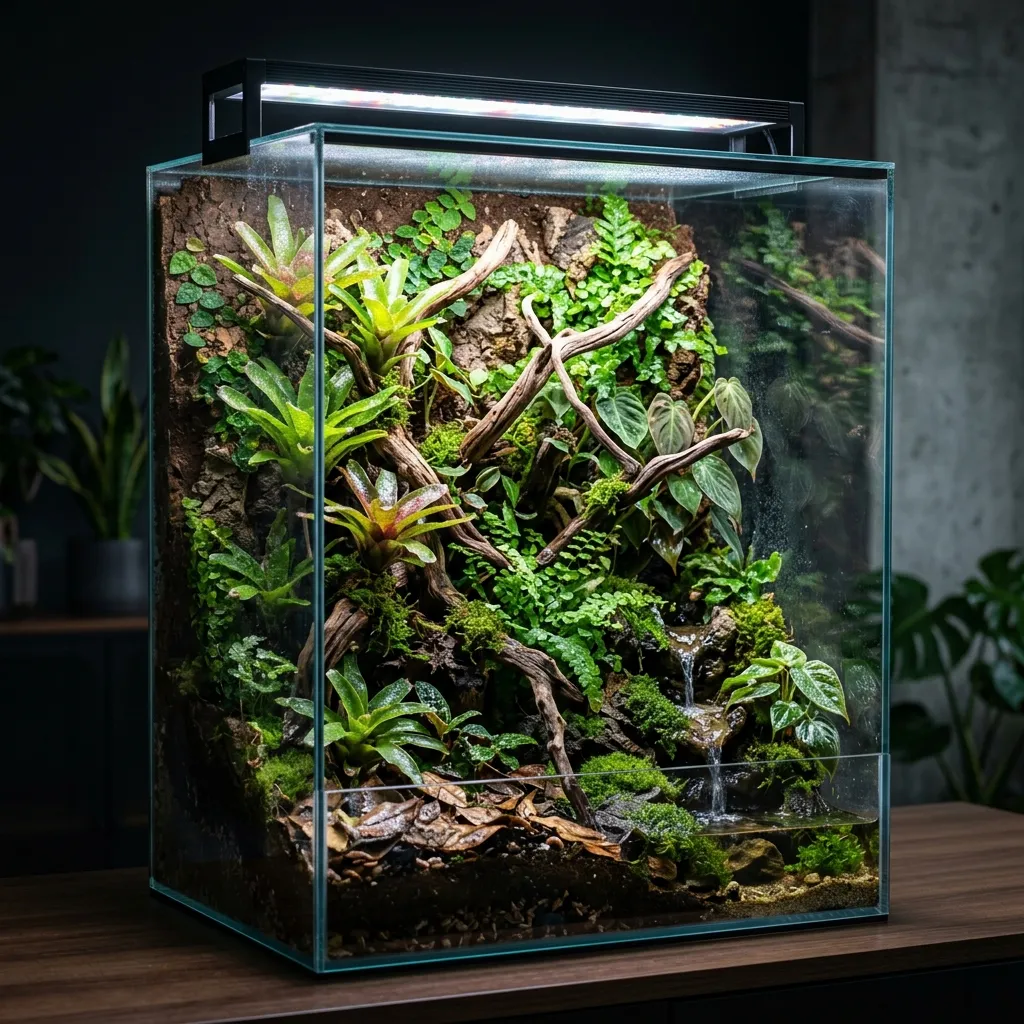
Applying leaf litter is the final and most satisfying step of building a bioactive terrarium. After your drainage layer, substrate barrier, and ABG mix are in place, grab handfuls of the leaf litter and spread it generously over the soil. You should aim for a layer that is at least 1 to 2 inches (3 to 5 cm) thick. You should not be able to see any exposed soil from the top down. For a more natural look, take a few of the larger, crispier leaves and crush them in your hands, sprinkling the fragments over the whole area to simulate natural forest decay. When planting, simply push the leaves aside, insert your plant into the soil, and push the leaves back around the base. Give the entire layer a heavy misting to help the leaves settle into place.
Long-Term Replenishment and Maintenance
Unlike the soil or drainage layer, leaf litter is a consumable resource. It is literally food for your ecosystem. Over the course of 3 to 6 months, you will notice the leaf layer visually thinning out. The oak leaves will disappear first, turning into vein skeletons before vanishing completely into nutrient-rich soil. It is critical that you do not let the terrarium run out of leaves, or your isopod population will crash and the soil will compact. Simply grab a fresh handful of Bioactive Supply leaves every few months and toss them right on top of the old ones. There is no need to mix or bury them; the microfauna will naturally migrate upwards to consume the fresh material.
Alternative Leaf Options
If you have access to a pristine, pesticide-free wooded area far from any roads or agriculture, you can harvest your own Oak, Maple, or Magnolia leaves. However, you MUST boil them for 10 minutes or bake them in an oven at 200°F (93°C) for 30 minutes to kill pathogens and pests, while monitoring them closely to prevent a fire. Avoid leaves from toxic trees like Pine, Eucalyptus, or Cedar, as their resins and essential oils are deadly to reptiles and insects. Given the time, effort, and risk involved in DIY leaf processing, a pre-sterilized, ready-to-use bag from a trusted brand remains the safest and most convenient option.
All Products