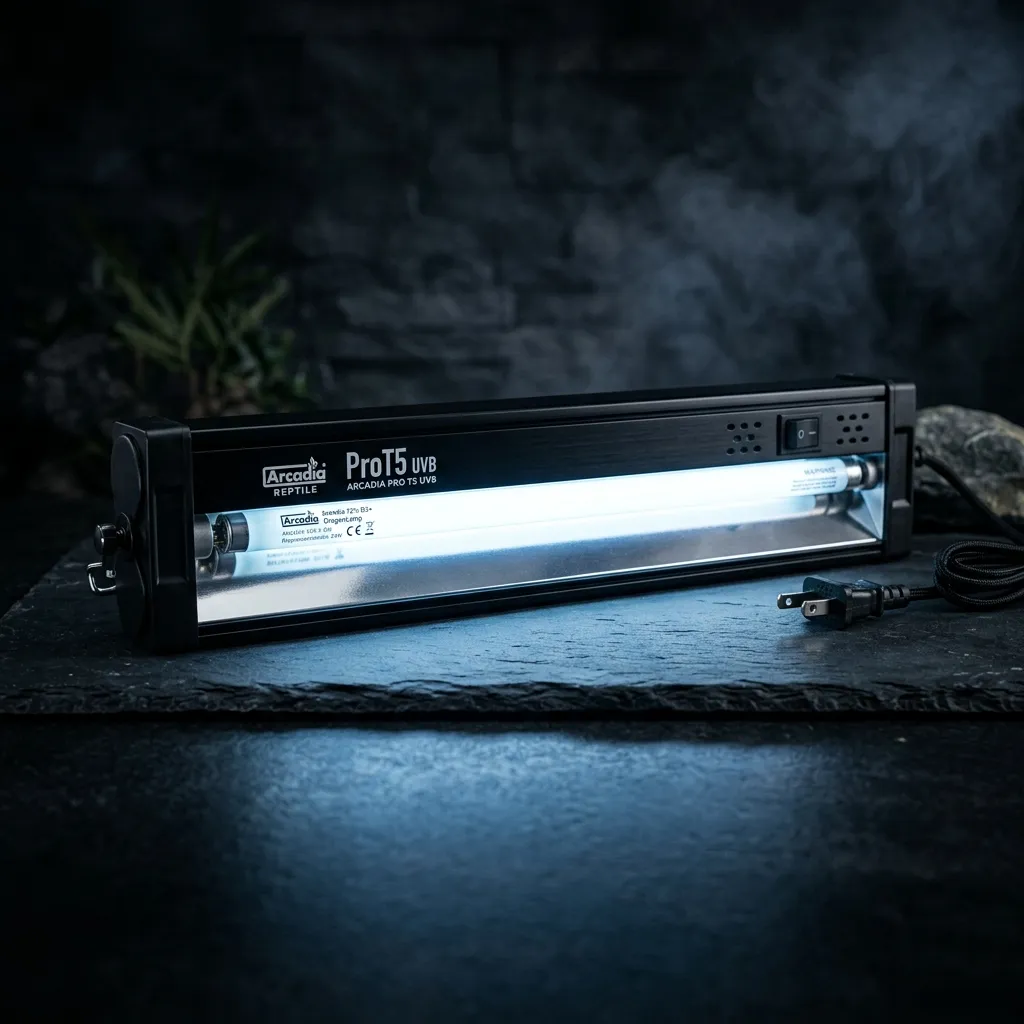
Arcadia ProT5 UVB Kit: The Gold Standard in Reptile Lighting
✅ Pros
- + High-output T5 technology provides drastically superior UVB penetration compared to old T8 bulbs or compact coils.
- + Integrated reflector quadruples the downward UVB output, ensuring the light reaches the basking zone.
- + Available in multiple strengths (2.4%, 6%, 12%, 14%) to perfectly match the specific Ferguson Zone of your species.
- + Flicker-free electronic ballast reduces stress on reptiles (who can see light flicker that humans cannot).
- + Kit is completely plug-and-play and can be seamlessly daisy-chained with the Arcadia Jungle Dawn LED.
❌ Cons
- - More expensive initial investment compared to cheap dome lamps and coil bulbs.
- - T5 bulbs must be replaced every 12 months as the UV phosphor degrades, even if the bulb still emits visible light.
- - Emits very little heat, so a separate basking bulb (like a halogen) is always required for thermoregulation.
The Science of UVB and Vitamin D3 Synthesis
In the wild, reptiles bask in natural sunlight to absorb Ultraviolet-B (UVB) radiation. When UVB hits their skin, it triggers a chemical reaction that produces Vitamin D3. Without Vitamin D3, a reptile cannot absorb calcium from its diet, no matter how much you supplement. This leads to a horrific, fatal condition called Metabolic Bone Disease (MBD), where the bones become soft, rubbery, and deformed. While dietary D3 supplements (like Repashy Calcium Plus) are helpful, providing natural UVB lighting allows the reptile to self-regulate its D3 production without the risk of vitamin toxicity. The Arcadia ProT5 kit delivers a safe, consistent spectrum of UVB that mimics the sun, ensuring your pet builds a strong, healthy skeleton.
Why Arcadia is the Undisputed Industry Leader
At BioactiveHub, we refuse to compromise on lighting. We exclusively use the Arcadia ProT5 system because Arcadia relies on rigorous scientific testing, specifically utilizing the 'Ferguson Zone' system. This system categorizes reptiles based on their natural sun-exposure habits (e.g., Zone 1 for nocturnal geckos, Zone 4 for desert monitors). Arcadia provides exact distance charts for their bulbs, telling you exactly how far the basking branch should be from the bulb to achieve the perfect UVI (UV Index). No other brand provides this level of transparent, scientifically backed data. Furthermore, their seamless linking cable allows us to run both our UVB and plant-growth LEDs off a single wall outlet.
Technical Specifications & Features
- ⚙️ Bulb Type: High-Output T5 Fluorescent (various wattages/lengths).
- ⚙️ Available Strengths: ShadeDweller (7%), Forest (6%), Desert (12%), Dragon (14%).
- ⚙️ Reflector: Highly polished, curved aluminum for maximum downward projection.
- ⚙️ Lifespan: Guaranteed 12 months of effective UVB emission.
- ⚙️ Included in Box: Fixture with built-in ballast, T5 bulb, power cord, linking cable, and mounting clips.
Installation Guide: Achieving the Perfect UVI
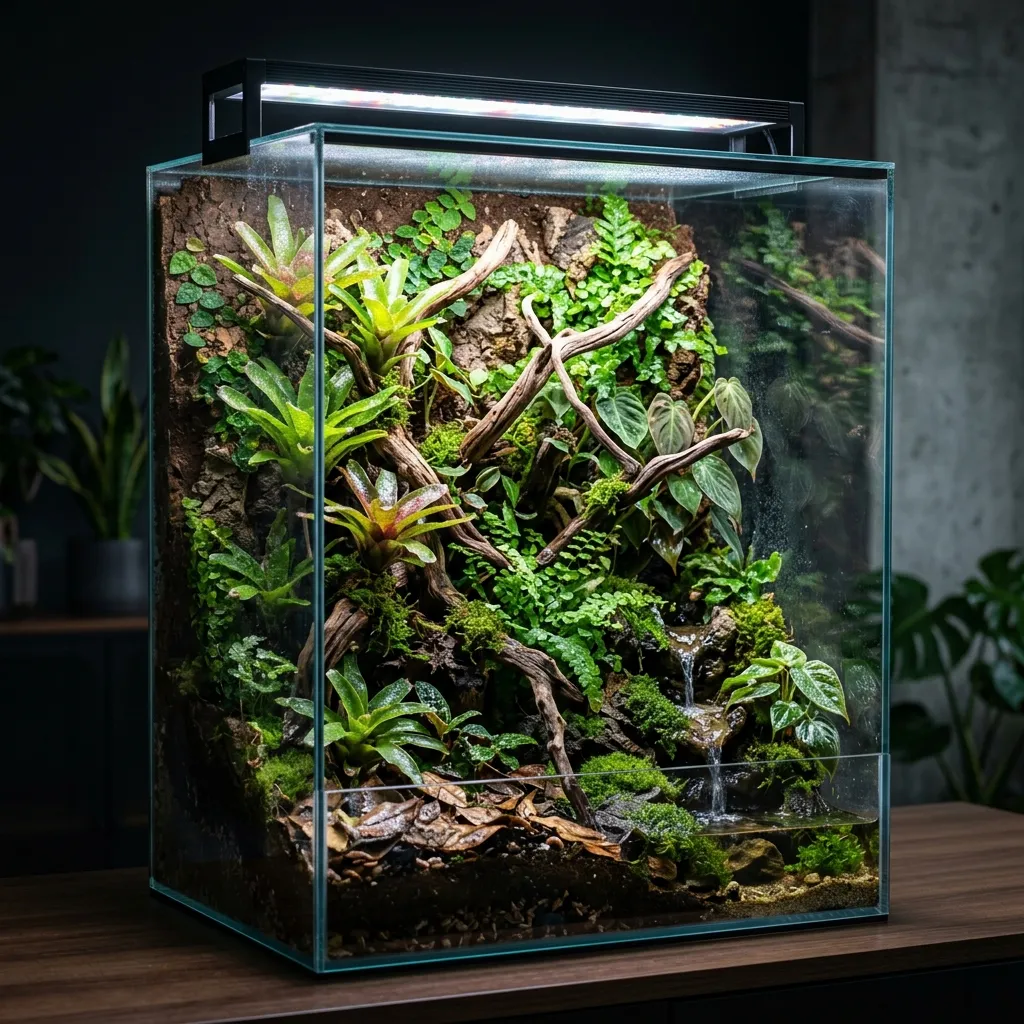
Never place the Arcadia ProT5 inside a highly humid terrarium unless it is explicitly designed with a waterproof guard. For 99% of setups, the fixture should sit flat on top of the terrarium's stainless steel mesh screen. Be aware that standard terrarium mesh blocks roughly 30% of the UVB light. Consult Arcadia's distance charts and use a measuring tape to position your reptile's highest basking branch at the correct distance from the bulb to hit their target Ferguson Zone. Ensure the UVB bulb completely overlaps with your heat lamp to create a natural 'patch of sunlight' where the animal receives heat and UV simultaneously.
Maintenance and Bulb Replacement
The most critical maintenance step is replacing the T5 bulb exactly every 12 months. The human eye cannot see UV light; just because the bulb still glows white does not mean it is producing UVB. The internal phosphors degrade over a year of use. To maximize output, use a dry microfiber cloth to wipe the dust off the glass tube and the metal reflector once a month. If you are deeply invested in the hobby, purchasing a Solarmeter 6.5 (a digital UV Index meter) is highly recommended to precisely measure the output of your lamps and know exactly when they are depleted.
Alternative Lighting Options
The only true competitor to the Arcadia ProT5 is the Zoo Med ReptiSun T5 HO Hood. Both use high-quality German-made bulbs and offer excellent output, though Arcadia's reflector design is generally considered slightly superior. We strongly advise against using compact fluorescent (coil) UVB bulbs in dome lamps. Coil bulbs create a dangerous, narrow 'laser beam' of intense UV that can cause eye damage (photo-kerato-conjunctivitis) while simultaneously failing to project light deep enough into the tank to be useful.
All Products