The Lungs of the Terrarium: Best Safe Plants
Discover the most resilient, aesthetic, and 100% reptile-safe botanical species, divided by ecosystem type.
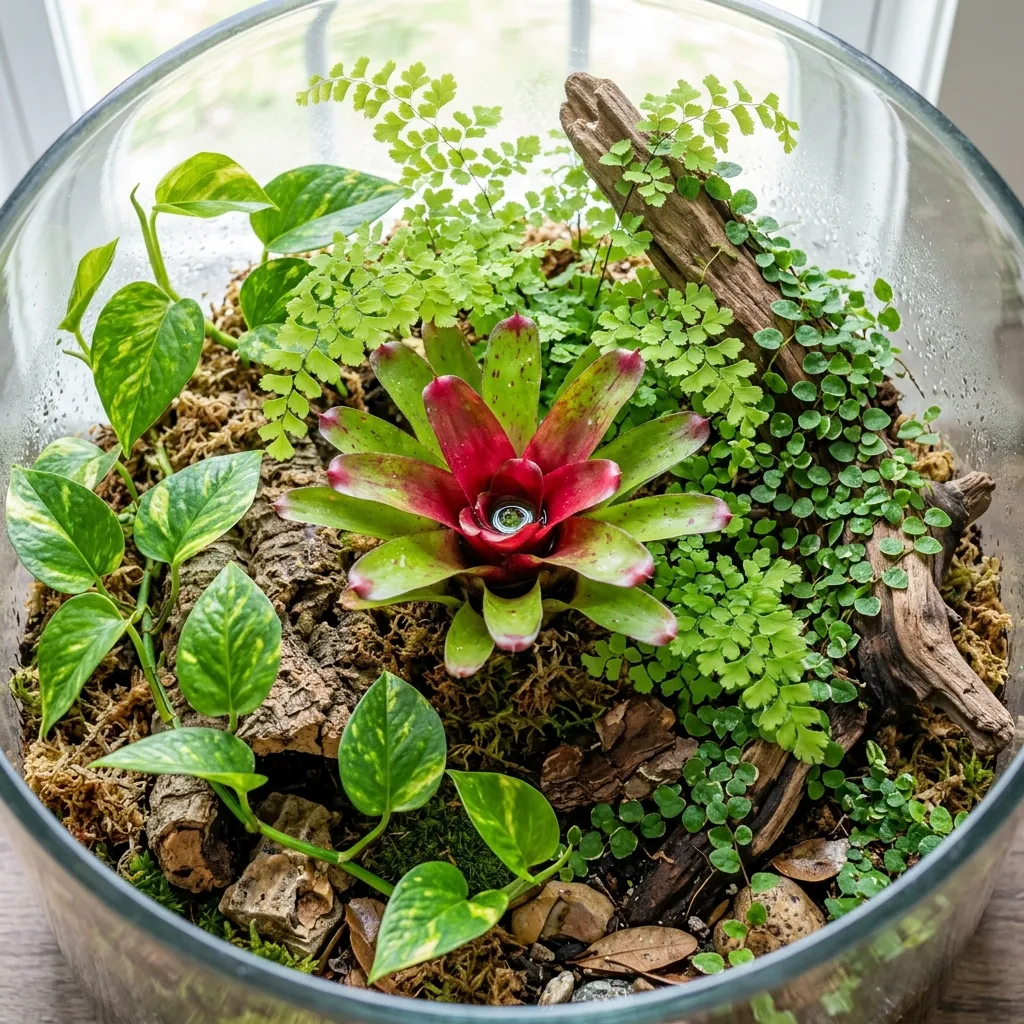
The Vital Role of Live Plants
In a sterile terrarium, fake plastic plants only serve to fill gaps. In a bioactive vivarium, live plants are the lungs and filtering system of the ecosystem.
Through a process called phytoremediation, plant roots actively absorb nitrates and nitrogenous compounds produced by your reptile's decomposed feces, preventing the soil from becoming toxic. Additionally, their foliage breaks lines of sight to reduce the animal's stress and, through transpiration, they help maintain stable ambient humidity levels.
1. "Indestructible" Plants for Beginners
If this is your first terrarium or you have a reptile that enjoys crushing things, you need species with aggressive growth and very high tolerance to watering mistakes:
- Pothos (Epipremnum aureum): Possibly the best terrarium plant ever discovered. Survives in low light, can be pruned relentlessly, roots from almost any node, and supports the weight of medium-sized snakes.
- Heartleaf Philodendron (Philodendron hederaceum): Similar to Pothos, but with a more elegant drape. Withstands very high humidity levels.
- Spider Plant (Chlorophytum comosum): Grows like a weed, is non-toxic, and constantly throws out "babies" that will fill empty spaces.
2. Tropical Ecosystem (Dart Frogs and Crested Geckos)
These ecosystems demand very high humidity (80-100%) and constant watering. You need plants that love water and provide microclimates:
- Bromeliads (Neoregelia spp.): Absolutely essential for dart frogs. Their rosette-shaped leaves retain small pools of purified water, ideal for egg-laying. Their roots are aerial, so they must be anchored to logs or cork, never buried in soaked soil.
- Creeping Fig (Ficus pumila): A tiny-leafed vine that attaches directly to the foam or cork background, creating a spectacular living green wall.
- Bird's Nest Fern (Asplenium nidus): Provides a wide, sturdy canopy, ideal for arboreal geckos to sleep hidden during the day.
3. Arid Ecosystem (Leopard Gecko and Bearded Dragon)
The greatest botanical challenge. Plants here must withstand intense lighting, extreme heat, and go weeks with dry soil, resisting heavy trampling:
- Sansevieria (Snake Plant / Mother-in-Law's Tongue): The tank of arid plants. Withstands massive droughts, is rigid as a board, and grows upwards without stealing horizontal space.
- Aloe Vera and Haworthia: Classic succulents without sharp spines. They store water in their thick leaves. Water them directly at the base every 15 days.
- Elephant Bush (Portulacaria afra): Unlike creeping succulents, this grows like a small hardwood tree, providing a very authentic "desert scrub" landscape.
4. The Secret to Growth: Lighting and Nutrition
A plant in the jungle receives sun through the canopy, but in a glass box in your living room, it's practically in the dark.
You cannot use chemically fertilized soil (like Miracle-Gro) because you will poison your cleaning insects and your pet. The only fertilizer must come from the "frass" (processed feces) of your clean-up crew. Therefore, the remaining energy must come from good LED terrarium lighting. Full-spectrum (6500K) lights with high PAR (Photosynthetically Active Radiation), like Jungle Dawn bars, are the difference between a plant barely surviving and one that turns your terrarium into a lush jungle.
Looking for the right gear?
Visit our section on LED lighting and premium substrates to ensure the explosive growth of your jungle.
View Botanical Gear