Mastering Microfauna: The Clean-Up Crew
Springtails and isopods are the unsung heroes of your terrarium. Learn how to culture them, feed them, and choose the right species.
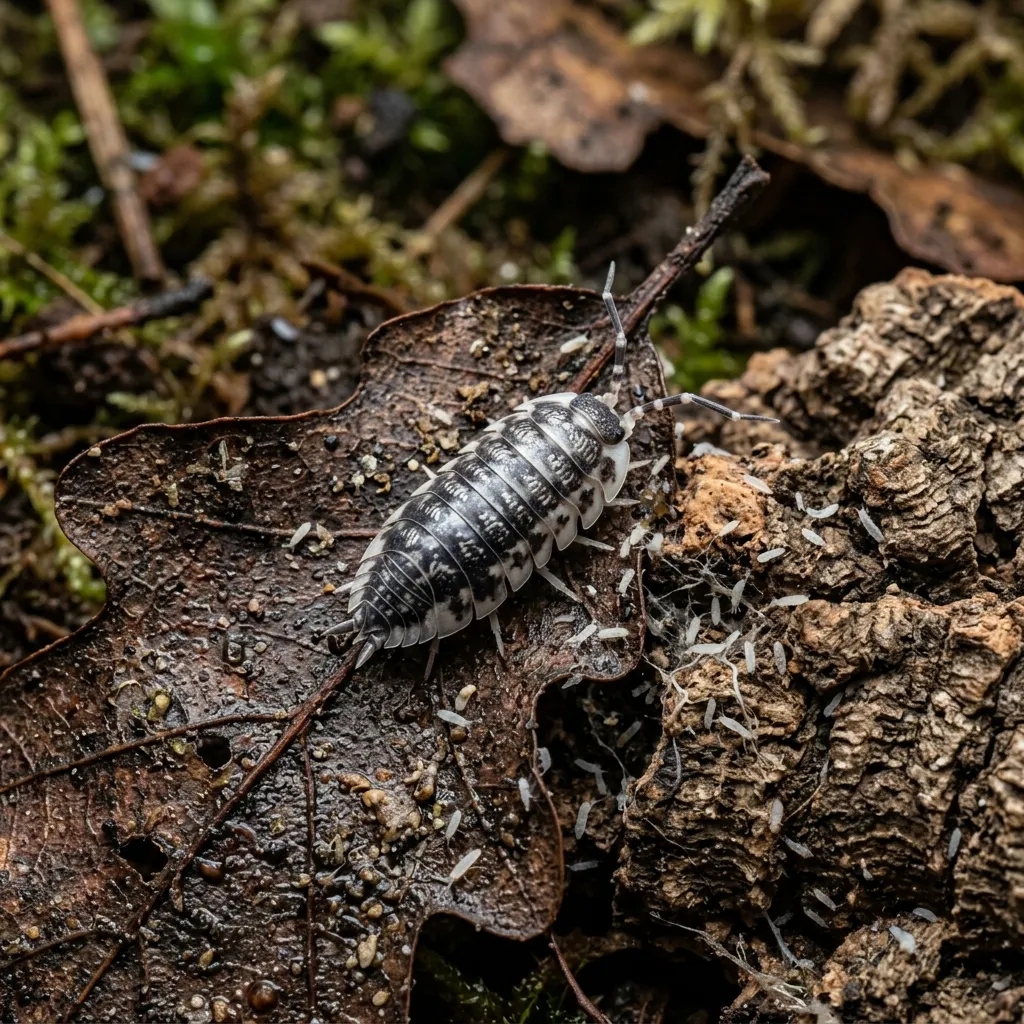
What Exactly is the Clean-Up Crew (CUC)?
In modern herpetoculture, the term CUC (Clean-Up Crew) refers to the microscopic army of detritivorous invertebrates that inhabit the substrate of your terrarium. They are the true unsung heroes of the bioactive system.
Their biological function is simple yet monumental: they consume decomposing organic matter (reptile feces, dead leaves, leftover food, fungi, and bacteria) and transform it into nutrient-rich fertilizer (humus) that your plants can absorb. Without microfauna, a closed terrarium would collapse under its own waste in a matter of weeks.
1. Springtails: The First Line of Defense
Springtails (Folsomia candida) are nearly microscopic, hexapod insects (white jumpers). Although they seem insignificant, they are your primary defense against terrarium collapse.
- Mold Consumers: When you set up a new terrarium, a "bloom" or explosion of white or green mold always occurs due to high humidity and fresh wood. Springtails actively graze on these fungal spores, completely eradicating the mold.
- Micro-aeration: As they move through the soil, they create microscopic tunnels that oxygenate plant roots.
- Base Culture: They can be mass-cultured outside the terrarium in airtight plastic containers on a bed of moist horticultural charcoal, feeding them brewer's yeast or raw rice.
2. Isopods (Woodlice): The Heavy Workers
Isopods (commonly called woodlice or pill bugs) are not insects, but terrestrial crustaceans. They handle the heavy lifting that springtails cannot manage.
They have strong jaws capable of shredding whole leaves, rotting wood, exoskeletons of dead feeder insects, and, most importantly, the large feces of adult reptiles. By digesting these elements, they excrete them as "frass" (extremely high-quality fertilizer for your plants).
3. Choosing the Right Isopod Species
The biggest mistake beginners make is buying "just any isopod." Each species has different humidity needs and aggression levels (protein hunger). You must match the isopod with your pet:
- Dwarf White Isopods (Trichorhina tomentosa): They are blind, tiny, and live strictly underground. They are perfect for dart frogs and delicate amphibians because they never bother the animal and prefer tropical environments.
- Powder Blue / Powder Orange (Porcellionides pruinosus): They are incredibly fast runners and reproduce exponentially. They are the undisputed best choice for arid environments (like the Leopard Gecko or Bearded Dragon) because they tolerate surface drought very well.
- Dairy Cow (Porcellio laevis): They are massive, voracious, and extremely fast breeders. They are ideal for large reptiles that produce a lot of waste (like Ball Pythons or Corn Snakes), but never use them with small amphibians, as their protein hunger can lead them to bite the soft skin of a frog.
4. Supplemental Feeding and Care
You can't just throw the bugs into the dirt and forget about them. Until your reptile starts generating waste regularly, your clean-up crew will starve to death if you don't intervene.
- Leaf Litter: This is 80% of their diet. You must maintain a permanent layer of oak, magnolia, or Indian almond leaves. When you see the leaves turn into veiny skeletons, it's time to add more.
- Calcium Source: As crustaceans, isopods need massive amounts of calcium to molt their exoskeletons. Add cuttlebone or limestone to the substrate.
- Protein Supplements: Once a week, offer them a small piece of carrot, zucchini, or commercial isopod powder food (Repashy Morning Wood). Place it under a piece of bark so it doesn't dry out quickly.
5. How to Maintain an Inexhaustible Supply (Master Culture)
Reptiles will eventually eat some of your isopods. To avoid having to buy new cultures every month, create a Master Culture.
Simply take a 5 to 10-liter plastic container (tupperware), poke small ventilation holes, fill it with 10 cm of organic soil, dry leaves, and cork bark. Add 20-30 starter isopods, keep them moist in a dark corner of your house, and feed them weekly. In a couple of months, you will have thousands of isopods ready to replenish any losses in your main terrariums!
Ready to populate your terrarium?
Find mature cultures of isopods, springtails, and supplemental food in our store.
View Microfauna Cultures